
1st Grade Social Studies Homeschool: Topics, Activities, and Tips
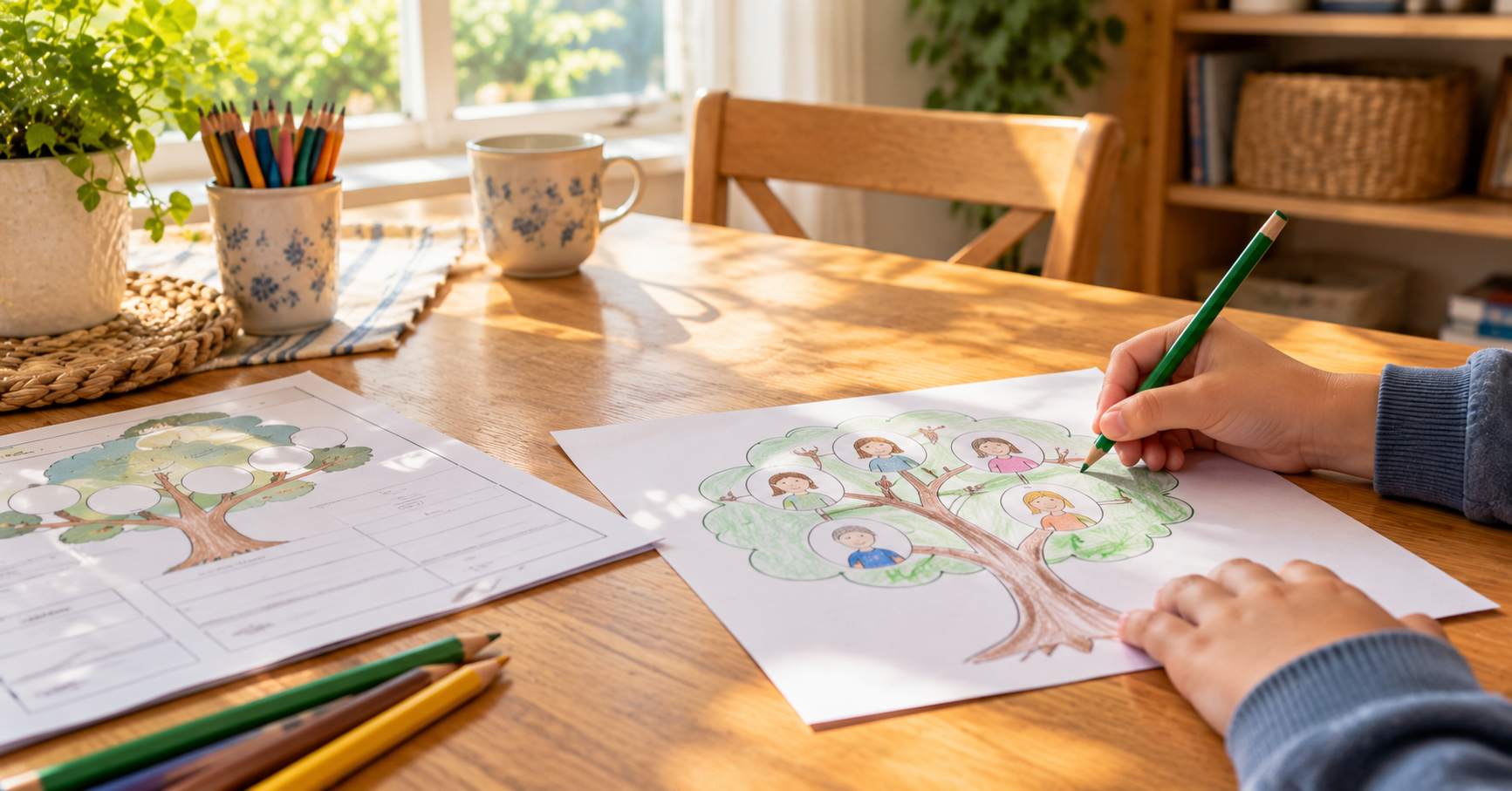
A 1st grade social studies homeschool year is about helping a six- or seven-year-old understand who they are, who is around them, and how their family, neighborhood, and country fit together. At this age, social studies is less about memorizing dates and more about noticing: family roles, community helpers, national symbols, and the simple rules that let people live together. Here is what the subject actually covers, and how to make it hands-on at the table.
What 1st Graders Learn in Social Studies
In the Grade 1 Social Studies curriculum, the year moves outward in a logical order, starting close to home and widening step by step:
- About Me and My Family — name, family, home, and what makes a child unique.
- My School and Community — learning rules, the different jobs people do, and how a community works.
- My Country and the World — national symbols, and the difference between a map and a globe.
- Responsibility and Citizenship — why communities need rules, and what rights and responsibilities mean at this age.
- Projects — hands-on work that pulls the year's ideas together.
That order matters: a child needs to understand family before community makes sense, and community before country clicks.
A 1st Grade Social Studies Homeschool Routine That Works at Home
Social studies lends itself well to conversation, and that is really the point. I have the lesson printed and ready before I call my kids, and I read it once while they listen, taking my time and letting them try to read the vocabulary themselves. For a subject like this one, the discussion is the best moment of the lesson: questions come up, we talk, and that is where the real learning happens. A child asking "why do we need rules?" or "what job would I want?" is worth far more time than rushing to the next page.
After the reading and talk, they work through the exercises on paper. If they need to reread a part, they do that themselves while working, which is how they learn to search for the answer rather than guess. We then correct together: I explain any mistakes without giving away the answer, so they get a second chance, and I check that they really understood before giving a mark and an encouraging comment. All of that takes about 45 minutes. The next day, they redo the same lesson on screen, about 10 minutes, as a review that locks in what they learned. One lesson a day is plenty to start, and up to two lessons a day is the most that stays productive before it gets overwhelming.
Hands-On 1st Grade Social Studies Activities
Social studies topics turn into activities naturally, since so much of the subject is about real people and places a child already knows.
Family and roots. A simple family tree is a favorite starting activity: who is in the family, and how they are connected. The Family Tree Project lesson walks through exactly this.
Jobs around the neighborhood. Naming jobs is easier when it is tied to people a child has actually seen: the mail carrier, a doctor, someone who grows food. The Jobs People Do lesson is built around that kind of naming.
Maps and globes. A paper map of the neighborhood, or comparing a flat map to a globe, helps a child see the difference between "nearby" and "far away." The Maps and Globes lesson introduces that distinction directly.
None of these need special supplies: paper, a pencil, and a conversation are usually enough.
Connecting Social Studies to Everyday Life
The easiest way to make social studies stick is to point at it while it is happening. A trip to the store becomes a chance to talk about the cashier's job. A family errand becomes a conversation about who is in charge of what at home, which connects naturally to the Responsibility and Citizenship unit and its simple idea: communities, and families, work better when everyone understands the rules and why they exist.
This is also where a child starts to understand rights and responsibilities in terms they can use: taking turns, telling the truth, helping with a task. None of it needs to be abstract. A child learns citizenship the same way they learn most things at this age, by seeing it modeled and then talking about it.
Simple 1st Grade Social Studies Topics to Start With
If you are not sure where to begin, start with the basics of identity and family before moving outward. The "Who Am I?" lesson is a natural first step, since it asks a child to describe their name, their family, where they live, and what makes them unique, which is the foundation everything else in the year builds on.
From there, move through community, country, and citizenship in order, and save the project lessons near the end of the year for pulling ideas together, such as building a poster about the people, places, and values that make a neighborhood special. There is no need to rush; a subject like this rewards slow, repeated conversation more than speed.
If you are building out the rest of the year alongside social studies, our guides to 1st grade science at home and 1st grade writing at home cover the other subjects in the same age-appropriate way.
Frequently asked questions
What is the main goal of 1st grade social studies?
The main goal is for a child to understand who they are, who is around them, and how their family, community, and country fit together. At this age that means learning about family roles, community helpers, national symbols, and simple rules, rather than memorizing facts.
How much time should 1st grade social studies take?
One focused lesson at the table takes about 45 minutes, plus a 10-minute screen review of the same lesson the next day. One lesson a day is a good pace to start, and up to two lessons a day is the most that stays productive without becoming overwhelming.
Do I need a curriculum to teach 1st grade social studies at home?
You can build your own lessons around a child's family, neighborhood, and everyday errands, or use a structured, printable curriculum so the topics build in order from family to community to country. Either way, the conversation that follows a topic matters more than any worksheet.
What are easy 1st grade social studies activities to do at home?
A family tree, naming jobs seen around the neighborhood, and comparing a paper map to a globe are all simple activities that need little more than paper and a conversation, and they connect directly to what a child is learning.
Unlock the full HSEA system for 7 days.
Add your first kid profile and your 7 days start: every lesson in every grade, saved progress for each child. Nothing to set up, no card required, nothing to cancel.
- ✓ All 1,680 lessons, Grades 1–6, every subject
- ✓ Profiles + saved progress for every kid
- ✓ Printable lessons with answer key