
1st Grade Reading at Home: Skills, a Simple Routine, and When to Get Help
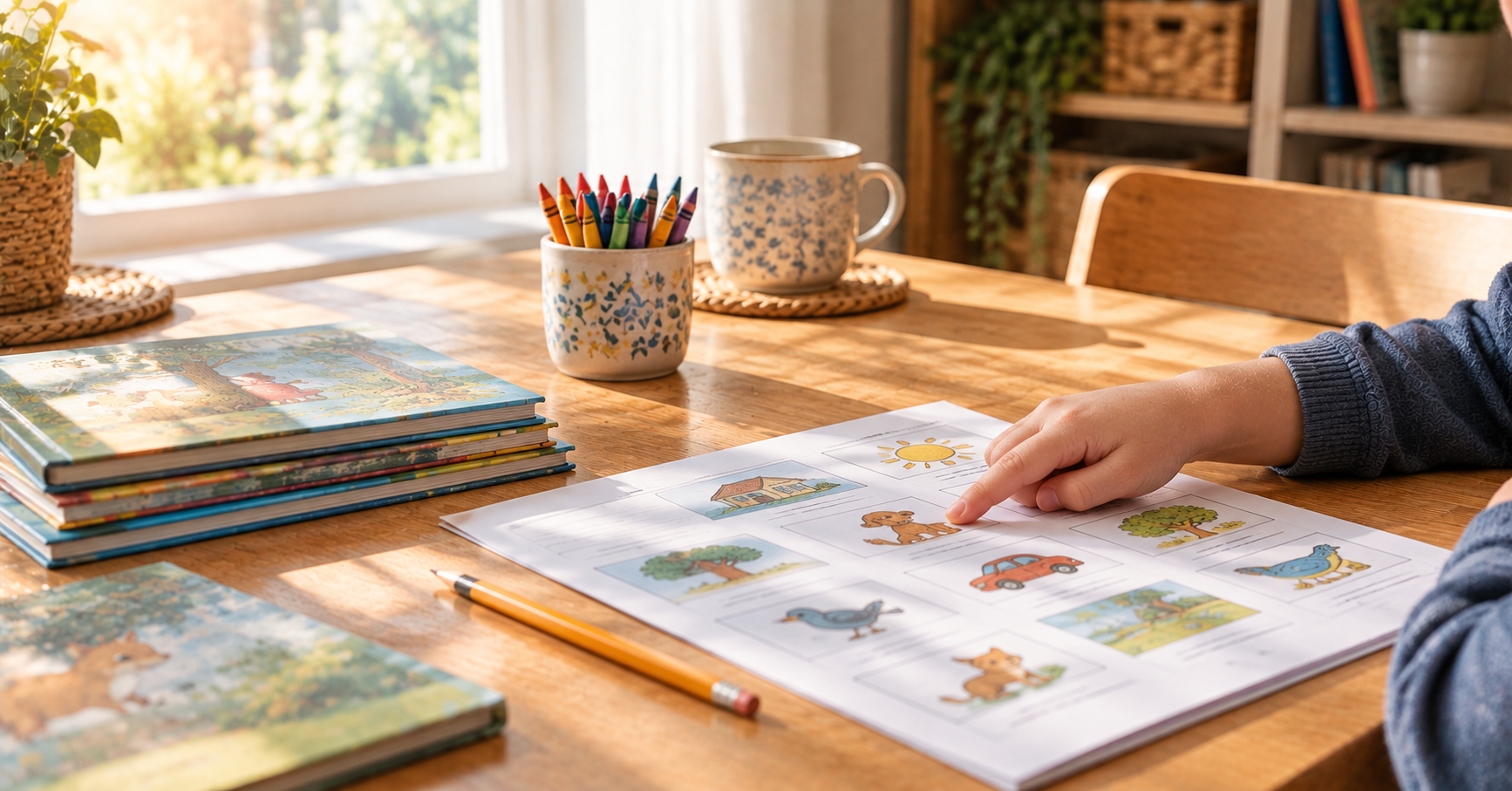
If you want to work on 1st grade reading at home without turning it into a fight, start with this: a 1st grader needs to decode sounds and words, make sense of simple stories, and read everyday text like signs and labels. You don't need a fancy program — a printed page, a notebook, and one focused lesson together each day go a long way. Here's what those skills look like, a simple routine that works, and how to tell if your child needs more support than you can give at the kitchen table.
The reading skills a 1st grader builds at home
1st grade reading moves through a few clear stages, and it helps to know what's coming next.
Sounds and words. Before your child can understand a story, they need to decode it. This starts with short vowel sounds in simple three-letter words like cat, pig, and sun, and moves into long vowel patterns — the silent e that makes a vowel say its own name, as in cake, like, and rose.
Understanding stories. Once your child can read the words, the next skill is making sense of them: asking and answering who, what, and where questions about the characters and events, and noticing how a character feels from what they say and do in the story.
Reading for information. 1st graders also practice reading outside of storybooks — signs, labels, and simple maps and charts are everyday reading your child will use for the rest of their life.
HSEA's Grade 1 reading curriculum follows this same order, lesson by lesson, if you want to see a full breakdown of what Grade 1 reading covers.
A simple 1st grade reading at home routine
You don't need anything complicated to make real progress. Here's the routine I use at my own kitchen table, and it works with any printed reading material, not just a curriculum.
- Print the lesson before you call your child. Having it ready matters, for them and for you.
- Read it together, once, slowly. Let your child try to read the vocabulary words themselves. Add your own explanations and a bit of your own experience so they feel involved — this is the best moment of the lesson. Questions come up, you talk, and that's where the real learning happens.
- Let them work through the exercises on paper. Read the instructions for them if needed, show an example, and let them try. If they need to reread the lesson, let them do it themselves — that's how they learn to search for the answer.
- Correct together. Explain mistakes without giving away the answer, so they get a second chance to get it right. Then check that they've really understood, and give them a mark and an encouraging comment.
That whole sit-down takes about 45 minutes. The next day, your child redoes the same lesson on screen for about 10 minutes as a quick review — it locks in what they learned. One lesson a day is plenty in the first week; after that, up to two lessons a day is still productive. More than that tends to overwhelm rather than help. If you're mapping this into a full day with other subjects, a realistic homeschool schedule for elementary grades can help you see where it fits.
A quick example: short vowel sounds
HSEA's free Short Vowel Sounds (CVC Words) lesson is a good example of how this plays out. Your child reads short, simple words like cat, pig, and sun out loud, works through a vocabulary box with definitions and examples, then practices identifying the middle vowel sound on paper. By the time you move to the silent-e lesson a few weeks later, that same slow, talk-it-through approach is what makes the new pattern click.
Reading together and reading projects
Once the basics are solid, 1st grade reading at home should also include reading with someone and reading for a reason, not just reading alone.
Partner reading — taking turns reading a page out loud and listening to each other — builds fluency and confidence, and it works well if you have more than one child or even just a willing grandparent on a video call. Asking "thin" questions (what happened) and "thick" questions (why did the character do that) after a page keeps your child thinking rather than just decoding.
Reading projects give all of that a purpose: a 1st grader can keep a simple reading log of the books they've read, or put together a short recommendation of their favorite book for someone else to read. Both turn reading into something your child does, not just something they're told to do.
Signs your child may need more support
Most 1st graders are inconsistent readers for a while — a word they got right yesterday trips them up today. That's normal. What's worth paying closer attention to is a pattern that doesn't improve over several weeks of real, calm practice:
- They still guess wildly at simple CVC words instead of sounding them out.
- They can't tell you what happened in a short story they just read, even in their own words.
- Reading time reliably ends in frustration or avoidance, no matter how calm and patient you keep it.
- Progress on the same type of word or question hasn't moved at all in a month.
Keep brief, honest notes over a few weeks rather than judging any single bad day — a Parent checklist you fill in after each session is a simple way to do this. If the pattern holds, bring those specific examples to your pediatrician or a reading specialist; they're better placed than any article to say what's going on.
If you haven't started homeschooling yet, a calm first-month plan can help you ease into a routine like this one.
Frequently asked questions
How many minutes a day should a 1st grader spend on reading at home?
There's no single right number, but a focused sit-down of about 45 minutes, plus a 10-minute screen review of the same lesson the next day, works well. One lesson a day is enough in the first week; up to two a day afterward is still productive.
What if my child still can't sound out simple words like cat or sun?
Keep practicing the same short vowel words and reread the same short pages rather than moving on every day. This takes real repetition for most 1st graders. If it hasn't improved after several weeks of calm, consistent practice, talk to your pediatrician or a reading specialist.
Do I need a formal reading curriculum for 1st grade at home?
No. You can build a routine with books and worksheets you already own. A structured curriculum simply gives you the lesson order and the printed pages already prepared, which saves you planning time.
How can I tell if my child understands a story, not just the words?
Ask them who, what, and where questions about the story and have them retell it in their own words. A clear, specific answer is a better sign of understanding than reading the words smoothly.
Unlock the full HSEA system for 7 days.
Add your first kid profile and your 7 days start: every lesson in every grade, saved progress for each child. Nothing to set up, no card required, nothing to cancel.
- ✓ All 1,680 lessons, Grades 1–6, every subject
- ✓ Profiles + saved progress for every kid
- ✓ Printable lessons with answer key