
What Is Living?
How to use: Print the PDF before you call your child. Read the lesson once together and talk it through, then the exercises on paper. Correct together with the answer key and the Parent checklist. The next day, your child redoes this lesson here on screen (about 10 minutes) to review it and save progress.
Learning Objectives
- 1Tell the difference between living and nonliving things
- 2Explain what living things need to survive
Mini Lesson
Look around you — some things are alive and some are not. Living things do special things that nonliving things can never do.
Living things grow and change
- A seed grows into a plant. A puppy grows into a dog.
- Example: A flower grows taller every day.
- Nonliving things like rocks always stay the same size.
Living things need food, water, and air
- Animals eat food and drink water to stay alive.
- Plants use sunlight and water to make their own food.
Living things make more of their own kind
- Dogs have puppies. Trees drop seeds. Birds lay eggs.
- A rock or a chair can never make babies.
Nonliving things do not grow or breathe
- A pencil does not eat, breathe, or grow.
- Some things like wood were once living but are not anymore.
Ask yourself: Does it grow? Does it need food and water? Can it make babies? If yes — it is living!
Guided Practice
Pick a word from the Trace menu and pass over the ghost letters with your finger or pen. Tap 🔍 Bigger for a fullscreen practice canvas.
Tip: If it grows and needs food and water — it is living!
Exercises
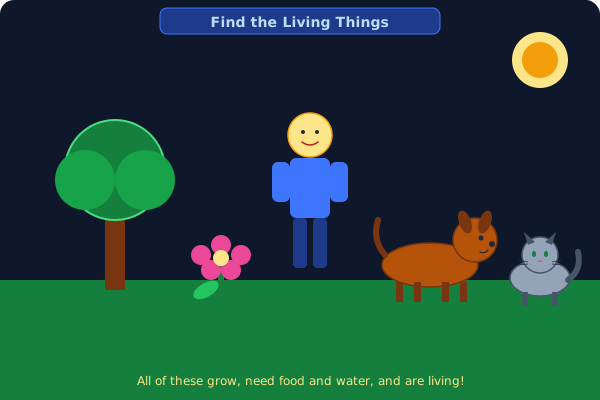
Tap each living thing in the picture when it is named. Try to find them all!
Tap the 🐱 Cat — a living animal that breathes and eats
0 / 5 found · Look at the dashed boxes — tap the right one.
1. Which of these is a living thing?
2. What do all living things need to stay alive?
3. How do we know something is living?
4. Which of these is nonliving?
5. What can living things do that nonliving things cannot?
6. Is a tree living or nonliving?
7. Which sentence is true about nonliving things?
8. Which group shows only living things?
9. Is a seed living or nonliving?
10. Which sentence is correct?
Parent Checklist
For the parent: after correcting together, check off what your child has really understood